EPR Compliance
Enabling Brands to Lead Sustainably
At Clean Enviro, we streamline your EPR journey with tailored solutions, certified recycled materials, and comprehensive documentation. Our end-to-end process ensures traceability and audit-ready compliance, helping you stay compliant and lead the way toward a sustainable, circular future.
Understanding EPR
A Key to Sustainable Business Practices
Producers (Manufacturers), importers, and brand owners (together referred as PIBOs) are responsible for EPR compliance, ensuring that their products are recycled or disposed of in an eco-friendly manner.
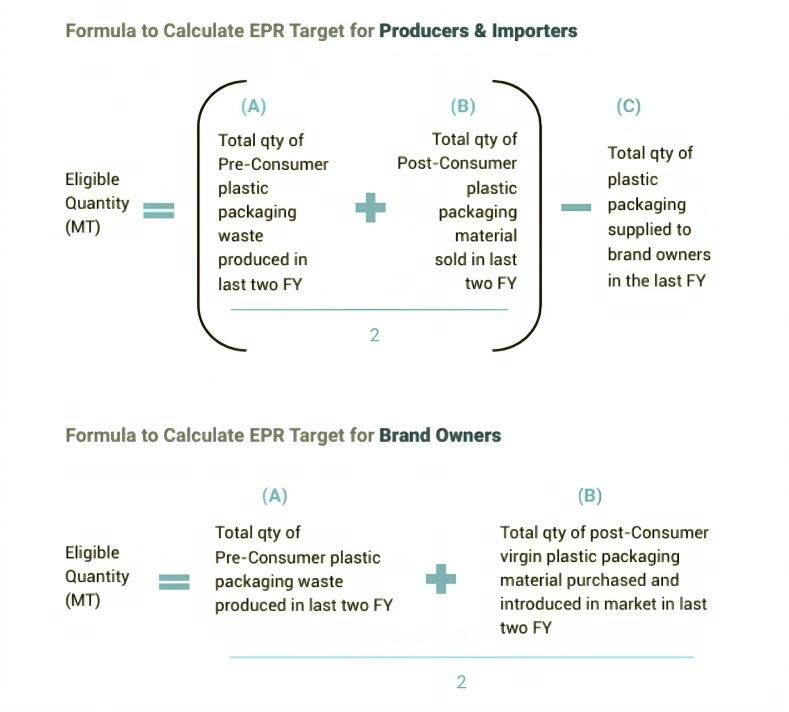
- Minimum Recycling of Plastic - Need to ensure minimum recycling of plastic introduced in the market as per target defined for the Financial Year by Govt of India (calculated on avg of last 2 years production)
- Minimum PCR PET Usage - Need to use minimum Post Consumer Recycled Content (generated by a CPCB approved Plastic Waste Processor) in new plastic production as per target defined for the Financial Year by Govt of India
- Minimum Recycling of Plastic - This needs to be proved by purchasing EPR Credits from a CPCB registered Plastic Waste Processor through the official online portal
- Minimum PCR PET Usage - The rPET must be purchased by a CPCB approved (and FSSAI Approved for food grade consumers) rPET producer and the sale must reflect on the official portal through transfer of UREP Credits
- Non-compliance triggers mandatory Environmental Compensation (EC) charges along with potential business license suspension. Furthermore, unmet targets are carried forward with a multiplier effect, compounding your financial and legal liability into the next financial year
Understanding EPR
A Key to Sustainable Business Practices
Producers (Manufacturers), importers, and brand owners (together referred as PIBOs) are responsible for EPR compliance, ensuring that their products are recycled or disposed of in an eco-friendly manner.
- Minimum Recycling of Plastic - Need to ensure minimum recycling of plastic introduced in the market as per target defined for the Financial Year by Govt of India (calculated on avg of last 2 years production)
- Minimum PCR PET Usage - Need to use minimum Post Consumer Recycled Content (generated by a CPCB approved Plastic Waste Processor) in new plastic production as per target defined for the Financial Year by Govt of India
EPR targets are to be met by buying EPR credits from Plastic Waste Processors such as Clean Enviro. EPR credits can also be purchased from other producers who have surpassed their EPR targets

Our Clients
Clean Enviro partners with forward-thinking brands to help them achieve their sustainability objectives.


By partnering with us, you gain:
- Full support in meeting EPR mandates across India
- Access to high-quality recycled PET (rPET) flakes and granules
- Documentation, traceability, and audit-ready compliance records
- A boost to your sustainability narrative and consumer trust
Regulatory Update
New PWM Amendment Rules (2026)
- 40% Mandatory FSSAI Approved Post Consumer Recycled (PCR) PET Content usage in FY 26–27
- Minimum 1/3rd of Shortfall from FY 25–26 rPET usage target (30%) must also be fulfilled in FY 26–27
- EPR Target set at 70% of Average PET Packaging introduced in last 2 years
- EPR Liability for PET can only be met via Category 1 (Rigid Plastic) Recycling credits on digital EPR portal
- Heavy Environmental Compensation (EC) Penalty applicable for each kg of shortfall in meeting targets
- Paying the penalty does not cancel the obligation, it rolls over to next FY with the penalty rate increasing for each violation